
Getting found in the age of AI
Photo by Zulfugar Karimov on Unsplash
The way people find information online is quietly changing.
Search is no longer just about Google. People are increasingly asking tools such as ChatGPT, Gemini, and Claude questions directly and often getting an answer without ever visiting a traditional search results page.
Earlier this year, we decided it was worth preparing the Women in Tech Gothenburg (WITGBG) website for that shift before it became a bigger priority. Rather than redesigning the site or starting a large search engine optimisation (SEO) project, we focused on a few practical, high-impact improvements that could make WITGBG easier to discover, understand, and reference both in traditional search and through AI tools.
Here’s what we focused on, what we changed, and what we’re starting to see.
What we focused on
Three areas stood out to us:
1. Making our events, mission and community easier for search engines and AI tools to understand
2. Making sure our pages clearly represent WITGBG when they appear in search
3. Understanding which channels actually lead people to become members, not just which ones generate visits
What we did
We started with a small set of quick wins rather than a major website project:
1. Improved the site's search and AI readiness
We reviewed the website from both an SEO and AI search perspective and updated key elements across our core pages, including page titles, meta descriptions, and structured information.
The goal was simple: make it easier for both traditional search engines and emerging AI-driven discovery tools to understand who we are, what we do, and what each page is about.
2. Built more useful, citable content around the community
Event pages are important, but they only capture one moment. We started adding more structured content around WITGBG itself, including post-event stories, and our Community Spotlight series.
These stories give people a better picture of the community, while also creating clear, useful source material that search engines and AI tools can potentially reference when answering questions about women in tech, communities, and events in Gothenburg.
3. Started measuring what leads to membership
We also set up conversion tracking around the membership journey. Instead of looking only at website traffic, we can now start understanding which channels contribute to people taking the next step and becoming members.
At the time, AI-driven discovery wasn't yet clearly visible in our standard analytics. We decided to do the work anyway: preparing the site for where search appeared to be heading, rather than waiting for the channel to become significant first.
Then, in May 2026, Google Analytics introduced dedicated AI Assistant traffic measurement, making visits from tools like ChatGPT, Gemini and Claude visible as their own acquisition channel. By then, we had already started putting the foundations in place.
What we're starting to see
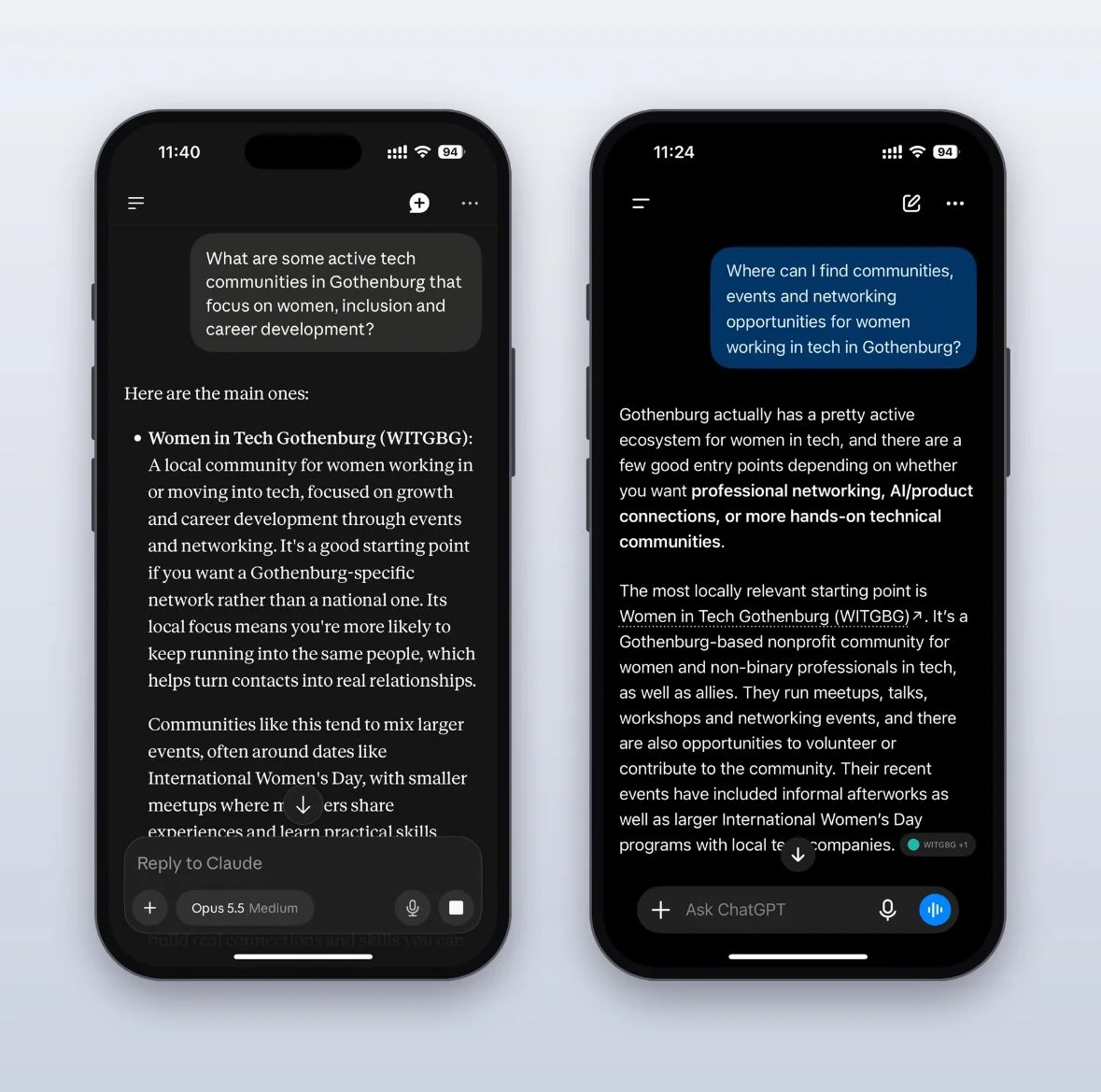
We can now see something we had been preparing for: people discovering WITGBG through AI tools.
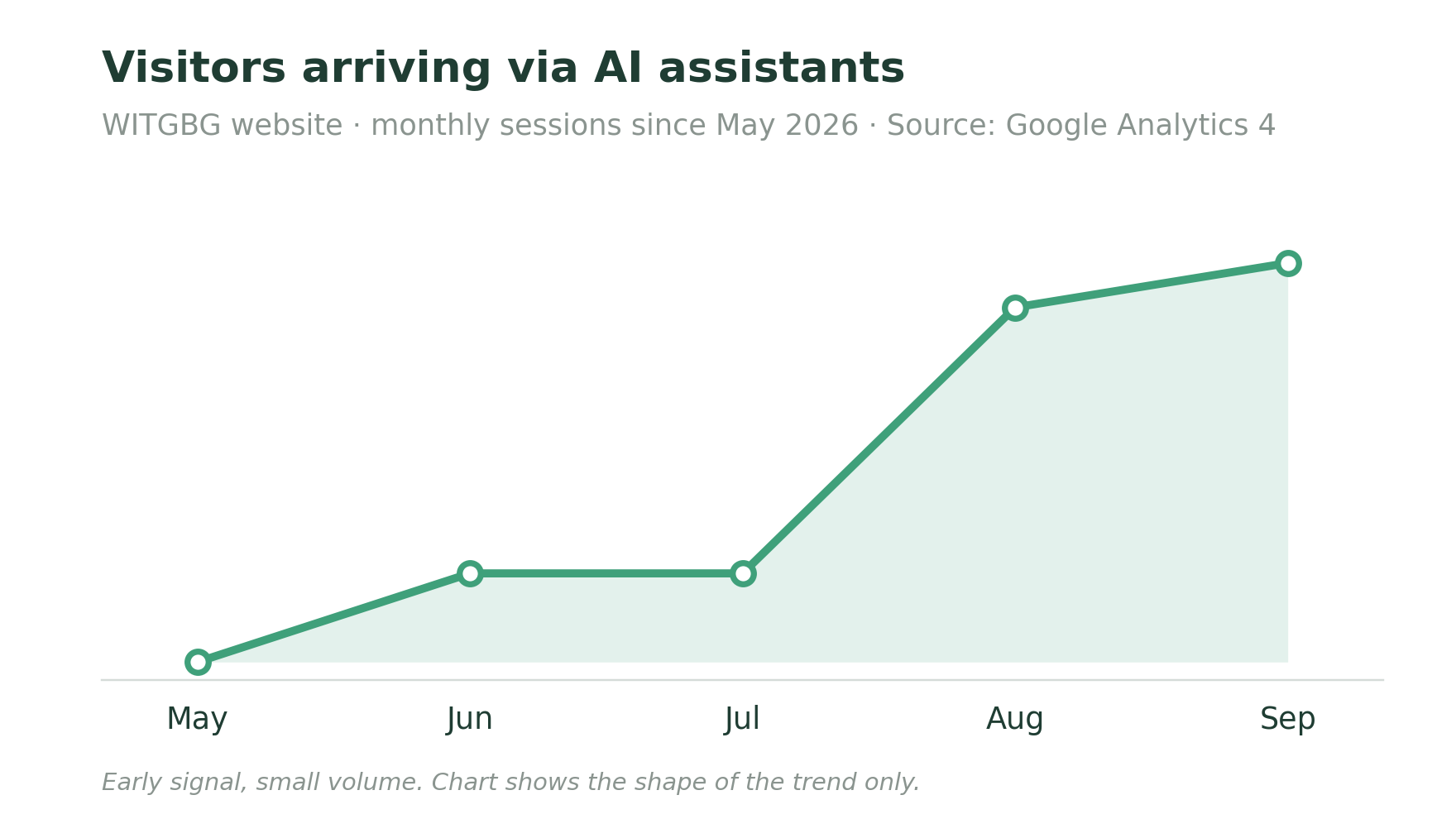
The AI Assistant channel is still emerging, but the early behaviour is promising. Visitors arriving through AI tools are showing one of the highest engagement rates across our acquisition channels, performing ahead of several more established sources.
It's still early, and we can't attribute this to any single website change. But we now have a measurable signal that wasn't visible when we started — and a way to follow how AI-driven discovery develops over time.
Why we're sharing this
The biggest learning so far is that preparing for AI-driven search doesn't necessarily need to start with a large project.
For us, it started with a few practical questions:
Can search engines and AI tools clearly understand who we are?
Do we have useful content they can reference?
And can we measure what happens when people discover us through new channels?
A handful of focused changes gave us a stronger foundation for all three.
Search will keep changing, and so will the tools people use to discover communities like ours. We'll keep learning, measuring, adapting, and sharing what we learn along the way.