
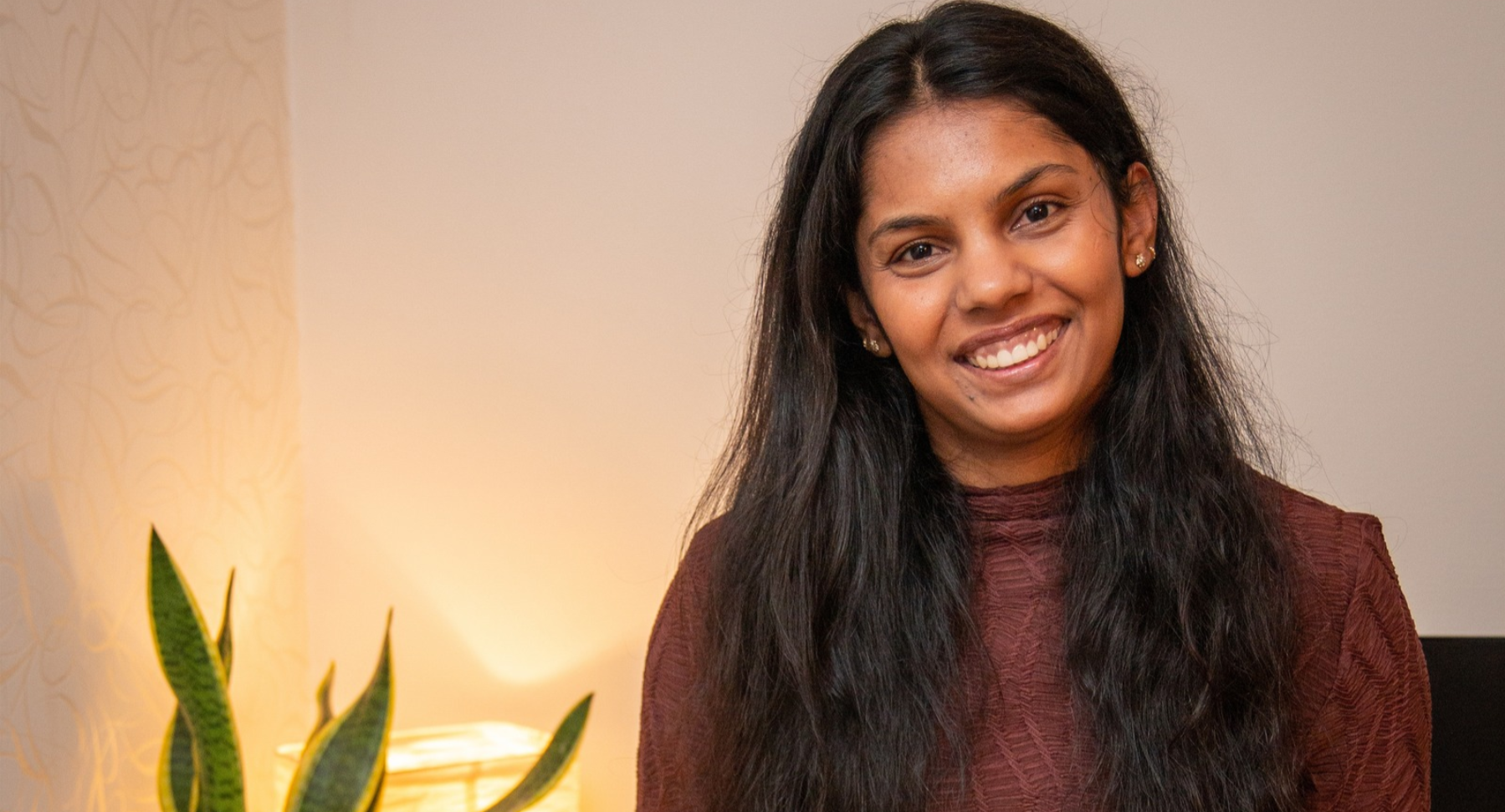
Lakshmi Priya Gandla
Lakshmi Priya Gandla’s journey from a small village in southern India to working at the forefront of European automotive electrification is a testament to how far ambition, resilience and technical excellence can take you. Today, as a power electronics researcher at leading Swedish research institute RISE, she works on national and European projects shaping the future of electric vehicles.
That journey, as she shares in this interview, was not easy. It meant embracing unfamiliar challenges and new environments while refusing to let cultural expectations or traditional opinions limit her ambitions. What kept her going was an unwavering passion for engineering, growing through hands-on challenges such as the international Formula Student competition at Chalmers, and the support of those who believed in her when she did not.
Tell us about yourself and your current role.
I am Lakshmi, originally from a small village in the Chittoor district of Andhra Pradesh, India. I completed my schooling and undergraduate education in India and worked in the power grid sector for about two years after graduating.
I always wanted to pursue a master’s degree, and after receiving offers from several European universities, I moved to Sweden during the pandemic in 2020 to study Electric Power Engineering at Chalmers University of Technology. Since then, Sweden has become a central part of both my personal and professional journey.
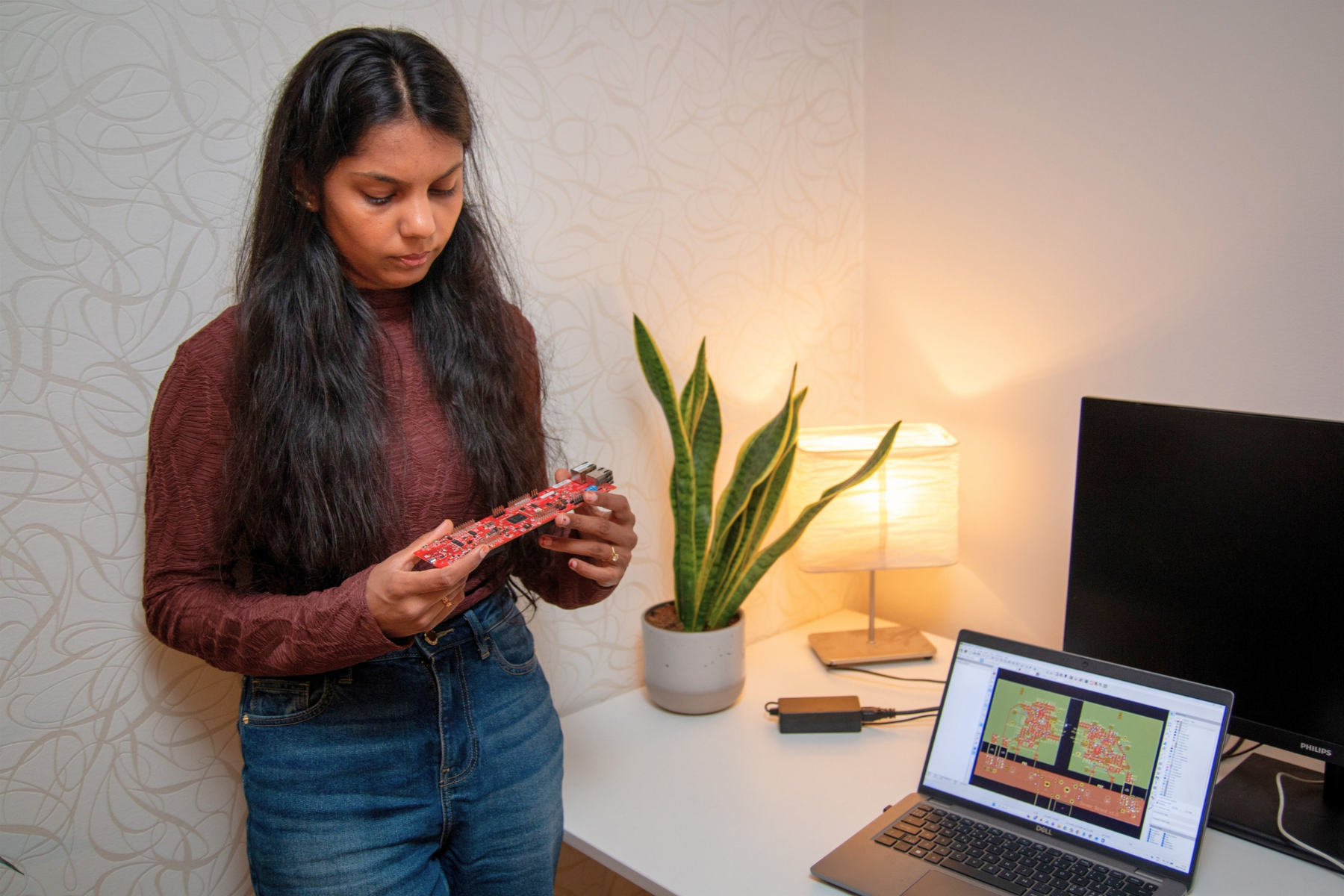
Today, I work as a power electronics researcher at RISE, a Swedish research institute. My focus is primarily on automotive electrification, specifically power converters, inverter technologies, and control systems. I work on national and European-funded research projects alongside key industry partners.
What first sparked your interest in tech?
I have always been drawn to technology, but it was electrical and mechanical systems that I found particularly fascinating. This led me to study electrical engineering at the National Institute of Technology Rourkela.
After graduating, I knew I wanted to build a career in engineering. Around that time, there was a global shift towards electric vehicles. Europe was already quite advanced in electrification, which was a major reason I chose Chalmers for my master’s.
However, the defining moment that truly made me feel like an engineer and sparked my deep passion for electronics was joining the Chalmers Formula Student project. It was fast-paced and intense. I learnt how to solve real engineering problems, build under pressure, work closely as a team, and compete against Formula Student teams from around the world.
That experience taught me what engineering is truly about and holds a very special place in my heart. I became more certain about the kind of engineer I wanted to be and started looking for roles in electrification and power electronics.
What challenges have you faced in your journey so far, and how have you navigated them?
As a girl growing up in India, one of my biggest challenges was having to convince people around me about the choices I wanted to make. Things have definitely progressed, but I still grew up around certain expectations about what girls should or should not do, and I often had to fight for the education and opportunities I wanted, and convince people that I was capable of making those choices for myself.
That was also one of the reasons I wanted to move somewhere where I could have more independence and freedom to grow, both personally and professionally, and Sweden gave me that opportunity.
Before moving to Sweden, I moved to North East India for my undergraduate studies. In some ways, I found that transition more difficult than moving to Sweden. The language, culture and environment were very different from what I had grown up with, and initially, I was completely outside my comfort zone. But over time, I learnt how to adapt and communicate, and become more independent.
Moving to Sweden came with a different set of challenges, especially getting used to the weather, long winters and darkness. But by then, I think I had already learnt how to adapt to new environments. I focused on finding activities and hobbies that I enjoyed and building a life outside of work as well.
Looking back, I think every time I pushed myself to try something new, I became a little more confident about facing the next challenge.
Looking back at your career so far, what is the one thing you are most unapologetically proud of?
I am proud of how far I have come.
When I look back at where I started, there were many moments where I had to step into unfamiliar environments and figure things out for myself. Today, I work as a researcher in power electronics — a field I genuinely enjoy. I have had opportunities to work with different industries, contribute to research projects, build things, solve engineering problems and continue learning.
Growing up, I wasn't exposed to many of the things which are now part of my everyday life. Over the years, I have learnt skiing, mountain biking, working hands-on with electronics, and many other things I - let alone anyone in my family - once would not have imagined myself doing. From a Swedish point of view, some of these things aren't that special, but from a rural Indian point of view, it is quite the contrast from the typical path where people learn only the one thing their parents tell them to learn.
One small thing that makes this journey feel very real to me is an electric bicycle that I built together with a friend, who is now my husband. We electrified a regular bicycle ourselves, and I still use it almost every day. I like that working with electronics and building things is not only part of my profession, but still something I genuinely enjoy as a hobby.
So more than one particular achievement, I am proud of the journey itself, the range of things I have learnt, and the fact that I kept choosing things that challenged me even when I wasn't completely sure where they would lead.
What is the core philosophy or mindset that guides your life and career?
Find what you are good at, understand where you can add value, and keep building from there.
Who are the 'champions' in your life who helped you see your own potential when you might have doubted it?
I have been lucky to have a few people in my life who have always supported me in their own ways.
My parents were never strongly against the choices I wanted to make, and my mom, in particular, has always stood by me. Even when I was making decisions that were different from what people around us were used to, she supported me and gave me the freedom to try.
My sister has probably been my biggest advocate. She is someone who always listens to me, understands where I am coming from, and reminds me of what I am capable of when I start doubting myself.
And over the last few years, my husband has been a big source of encouragement. We work in similar technical areas, so we are constantly discussing technology, electrification, new ideas, and things happening around the world. He often sees potential in me even when I don't see it myself, and having someone who understands both my work and my ambitions has been very valuable.
I think all of them, in different ways, have helped me become more confident in the choices I make.
What advice would you give to others building a long-term career in tech?
Technology changes quickly, so be open to trying new things and stepping outside your comfort zone. I also think you don’t need to have your entire career planned from the beginning. Each experience teaches you more about what you enjoy and where you want to grow.
Finally, value the people around you. Technical skills matter, but teamwork, communication, and learning from others are just as important.