
Community Spotlight: Srijita Basu
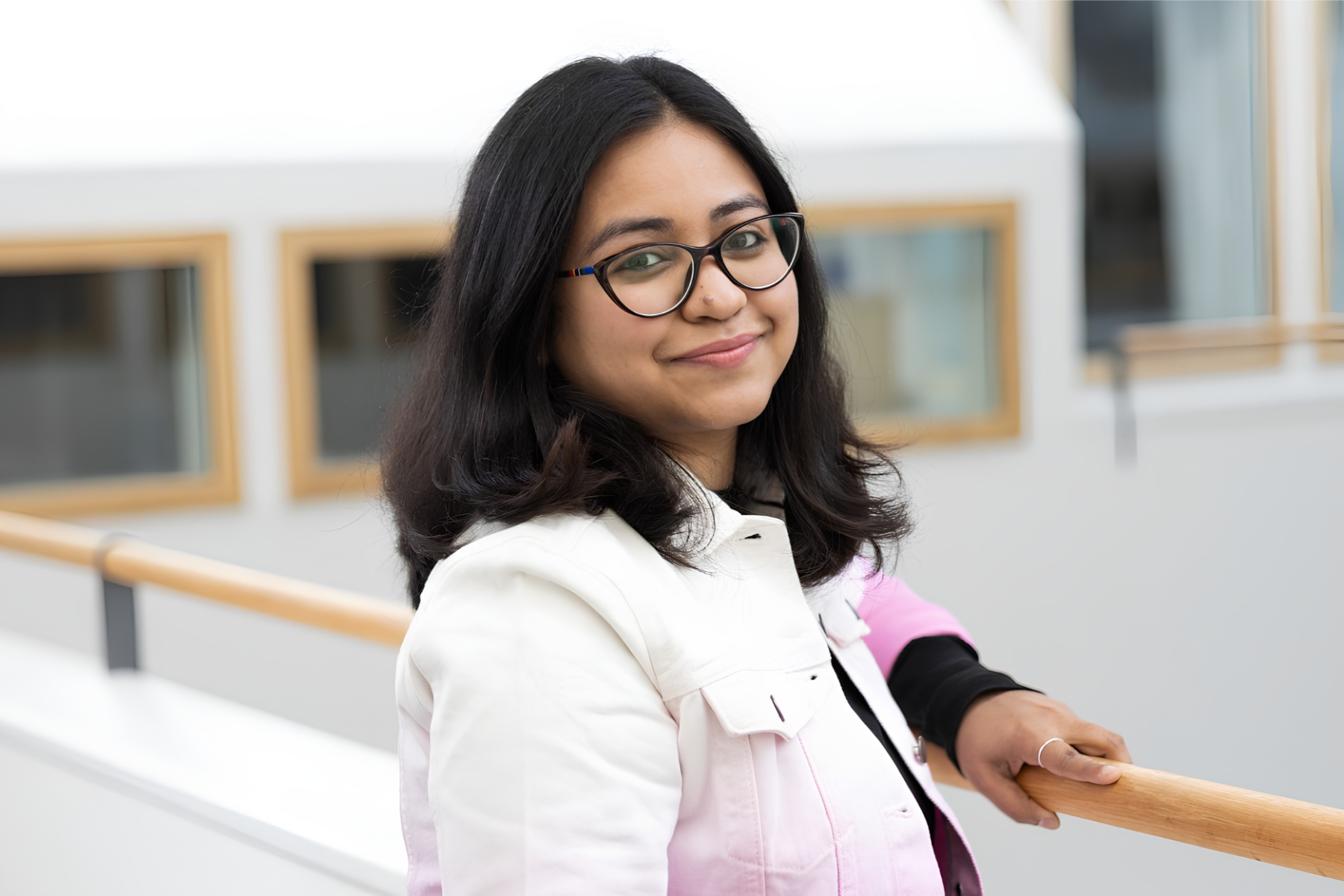
Srijita Basu
Dr. Srijita Basu’s work has spanned everything from programming a 14-ton Volvo truck to securing autonomous AI agents. As a postdoctoral researcher at Chalmers University of Technology and the University of Gothenburg, her work sits right where software engineering, cybersecurity, and AI meet. Between mentoring students through hands-on projects and designing reliable software systems, Srijita’s career has been guided by a simple motto — never be afraid to be a beginner again.
In our latest Community Spotlight feature, she opens up about her evolving research journey, navigating major career pivots, empowering the next generation of engineers, and why human intuition matters more than ever in the era of agentic AI.
Tell us about yourself and your current role.
I’m Srijita Basu, a researcher and educator working at the intersection of software engineering, cybersecurity, and AI. I’m currently a post-doctoral researcher at Chalmers University of Technology and the University of Gothenburg, where much of my work focuses on making increasingly intelligent and connected software systems more secure and trustworthy.
My journey in tech has evolved quite a bit from cloud computing, blockchain, and software-defined networks to automotive software security, and now to agentic AI and AI-driven software engineering. What connects all of these areas for me is one question - as technology becomes more powerful and autonomous, how do we make sure we can actually understand, trust, and depend on it?
Alongside research, teaching and mentoring have always been an important part of who I am. I really enjoy creating spaces where students can experiment, ask questions, and see how what they learn connects to real-world engineering problems.
What first sparked your interest in tech?
My interest in tech really came alive during my Master’s, when I joined a cybersecurity lab. One of my first challenges was being given access to HP servers and asked to set up an entire cloud environment from scratch. At the time, it felt quite daunting because I had to understand not only the software, but also how the servers, switches, and networking devices worked together.
When I finally got the setup running, I discovered something that has stayed with me ever since, the satisfaction of building a working environment yourself and then having the freedom to experiment with it. I became fascinated by questions like, how does a physical network actually behave, how can software control real hardware, and how can we program systems to follow the rules we design?
That experience changed the way I saw technology. Development and research stopped feeling like something I was simply studying and became something I genuinely enjoyed exploring. Since then, that curiosity of understanding how systems work, building them, and then asking how we can make them better and more secure has been a constant thread throughout my career.
What challenges have you faced in your journey so far, and how have you navigated them?
One challenge that has come up repeatedly in my journey is learning to become comfortable with being uncomfortable. When I joined the Software Engineering Unit in Gothenburg as a postdoctoral researcher, I was entering not only a new research environment but also a different way of thinking about research. The questions being asked, the methodologies, the collaborative culture, and even the way research problems were framed were quite different from what I had previously experienced.
Initially, there was a lot to understand and adapt to. But that transition has probably shaped me more than I realised at the time. I learnt to ask more questions, be open to unfamiliar approaches, and become comfortable saying, “I don’t know this yet, but I can learn it.” Over time, that made me much more confident as a researcher.
A very different challenge came when I was given access to a 14-ton Volvo truck and had to learn, essentially from scratch, how to program and actuate it. The challenge became even more meaningful because I then had to train students before a hackathon where they would write their own programs to control the truck. There is quite a difference between understanding something yourself and understanding it well enough to help someone else work with it safely and confidently. Seeing the students eventually run their programs on a real truck was incredibly rewarding.
Experiences like these have taught me that I don’t necessarily need to begin with all the answers. What matters more is being willing to learn deeply, adapt, and eventually turn that learning into something I can share with others.
Looking back at your career so far, what is the one thing you are most unapologetically proud of?
What I am most unapologetically proud of is my willingness to keep reinventing myself. I have never been afraid to enter a space where I am not yet the expert.
My career has taken me from cloud computing, blockchain and software-defined networks to cybersecurity, automotive software, and now agentic AI and AI-driven software engineering. Each transition has meant learning again, sometimes from almost zero and accepting the discomfort that comes with that. But those transitions have also given me some of the experiences I value most. I am proud that I have not let myself become defined by one technology, one research topic, or one role. I have remained curious enough to change direction when something new challenged me, while carrying what I learnt from each stage into the next.
How would you best sum up your outlook towards tech?
In tech, innovation is only part of the journey. The real challenge is to build systems that are intelligent enough to help us, secure enough to protect us, and trustworthy enough to depend on.
Have there been moments where you’ve considered leaving tech? If so, what made you stay?
I don’t think I have ever seriously wanted to leave tech, but I have had moments when I questioned what my place in tech should look like. There are phases in an academic career when it is easy to reduce progress to publications, deadlines, projects, or the next position, and that can make you lose sight of why you started in the first place.
What has kept me connected is realising that tech, for me, is not only about the technology itself. It is also about people. Some of the moments I value most are when a student suddenly understands something they were struggling with, when I can mentor someone through a thesis or project, or when research moves beyond a paper and connects with a real engineering problem.
That changed my perspective. I stopped thinking that I had to choose between being a researcher, an engineer, and a teacher. Tech gives me room to be all three. That combination of creating knowledge, building things, and helping others grow is what has made me stay.
Who are the 'champions' in your life who helped you see your own potential when you might have doubted it?
My mother has always been my strongest source of belief. There have been moments when I questioned whether I was ready for the next step, but she has had this ability to see possibility in me before I could see it myself. That kind of quiet, consistent confidence has mattered enormously throughout my journey.
Professionally, Prof. Mazumdar at Jadavpur University and Prof. Miroslaw Staron at Chalmers University of Technology have been two of the most remarkable champions in my life. They gave me opportunities to work on real systems and challenging research problems at a stage when I was still discovering what kind of researcher and engineer I wanted to become. More importantly, having a mentor who trusted me with responsibility helped me develop confidence in my own abilities.
I think champions do more than encourage you. Sometimes they lend you their confidence until you have built enough of your own. I have been fortunate to have that both personally and professionally.
What advice would you give to others building a long-term career in tech?
For anyone building a long-term career in tech today, especially students and early-career engineers, my advice would be - don’t try to compete with AI at being AI. Build the skills that allow you to work with it intelligently. We are moving from a world where AI mainly assists us to one where agentic systems can plan, generate code, test, review, and take increasingly autonomous actions. I think this can feel intimidating when you are just entering the field, you may wonder, where do I fit if an AI agent can already do so much? Your real value will come from understanding the problem deeply, knowing what to ask, designing the right system around the AI, recognising when its output is wrong, and taking responsibility for what finally gets deployed. That means fundamentals still matter. Software architecture, security, systems thinking, debugging, and domain knowledge become more important, not less, because someone still has to understand the consequences of what an agent produces.
I would also encourage young engineers to use AI actively rather than fear it. Experiment with agents, build with them, understand their limitations, and learn how to develop skills and evaluate their performance. The goal should be to become the engineer who knows what should be built, why it should be built, and whether what was built can actually be trusted.